50 Years After Nixon’s China Pivot: How a Cold War Gamble Reshaped Global Power
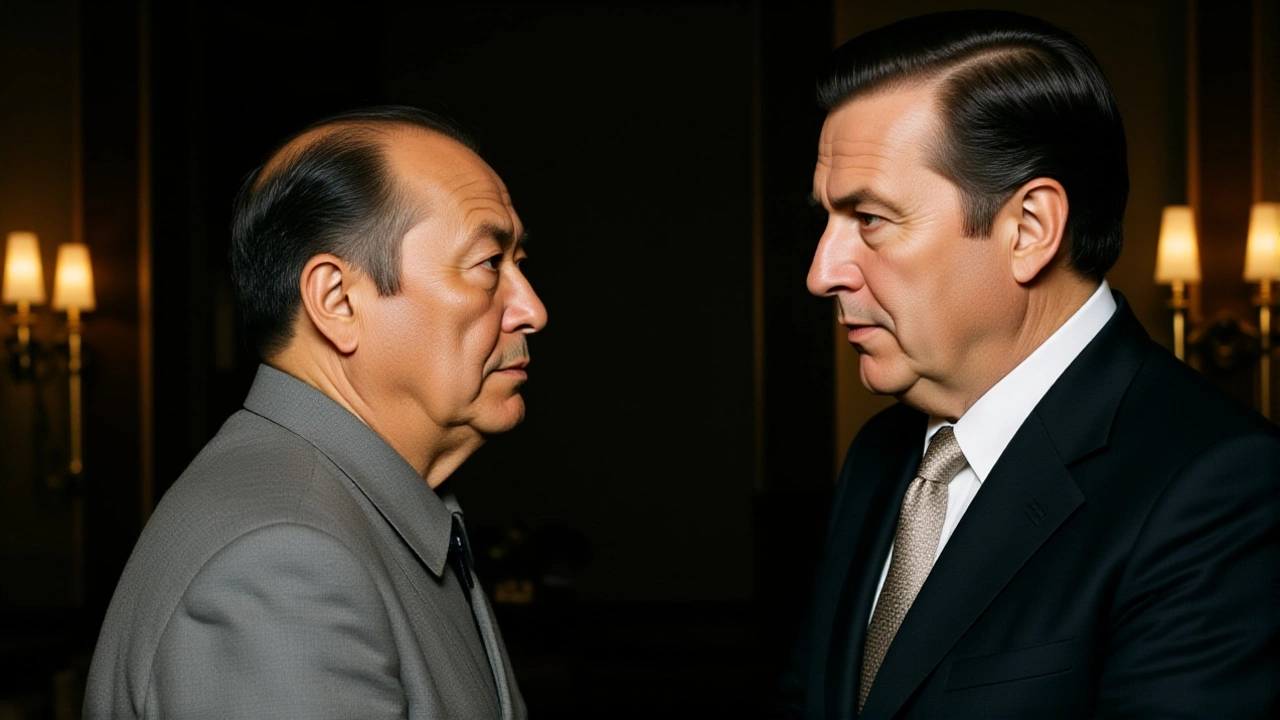
On July 15, 1971, Americans tuning into their televisions heard something unthinkable: President Richard Milhous Nixon announced that his National Security Advisor, Henry Alfred Kissinger, had just returned from a secret mission to the People's Republic of China—and that the president himself would soon visit Beijing. The revelation didn’t just shock the world. It rewrote the rules of Cold War geopolitics. By reaching out to Mao Zedong’s China, Nixon and Kissinger didn’t just open a door—they shattered a wall. And 50 years later, the aftershocks still echo in Washington, Beijing, and Moscow.
The Secret That Changed the World
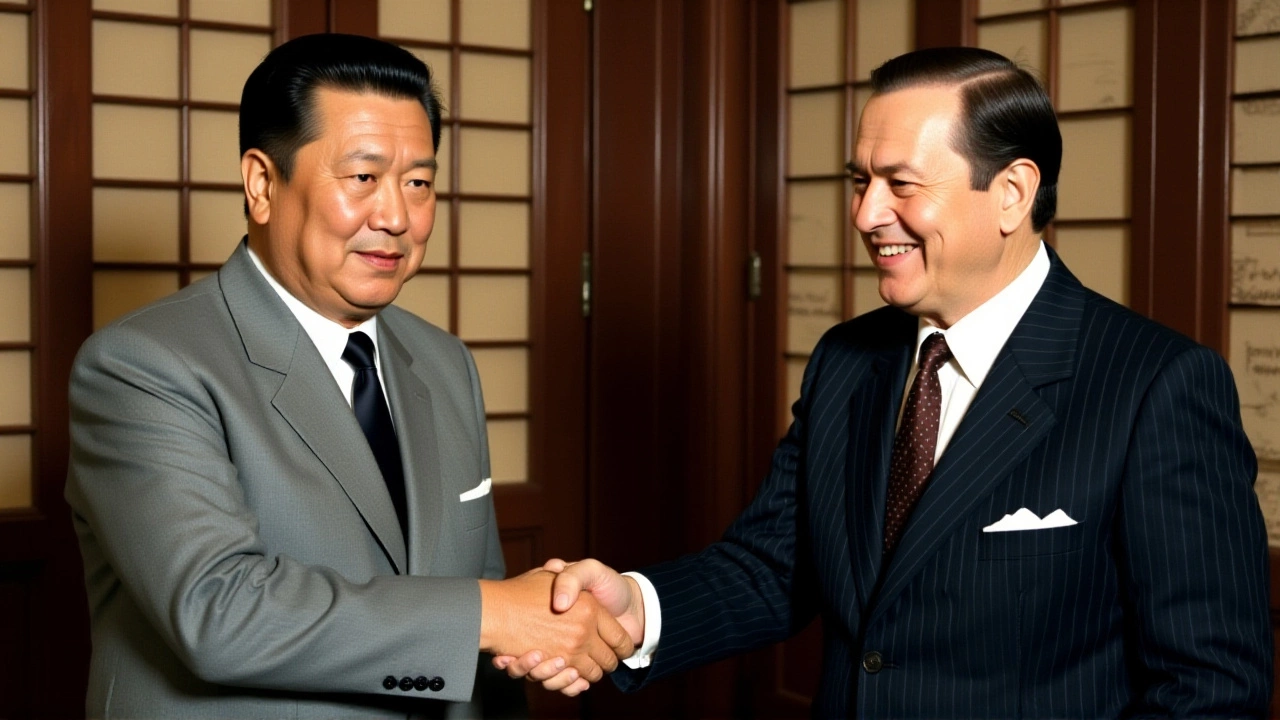
Kissinger’s clandestine trip in April 1971 wasn’t just risky—it was almost absurd. The U.S. and China hadn’t had formal diplomatic ties since 1949. Taiwan, under Chiang Kai-shek, was still recognized by Washington as the legitimate government of China. But Nixon and Kissinger saw something others didn’t: a chance to exploit the deepening rift between Beijing and Moscow. After bloody border clashes in 1969, Mao’s regime feared the Soviet Union more than the United States. Meanwhile, America was bogged down in Vietnam, desperate for leverage. "We thought all socialist/communist states were the same phenomenon," Kissinger later admitted. "We didn’t understand until the President came into office the different nature of revolution in China." The deal came with a brutal price: Taiwan. In private, Kissinger told Nixon, "It’s a tragedy that it has to happen to Chiang at the end of his life, but we have to be cold about it." Nixon didn’t flinch. He authorized the withdrawal of two-thirds of U.S. troops from Taiwan and signaled tacit acceptance of Beijing’s "One China" policy. The handshake between Nixon and Mao in February 1972 wasn’t just symbolic—it was strategic. And it worked. The U.S. gained a counterweight to the USSR; China gained international legitimacy and access to Western technology.
Triangular Diplomacy: The Cold War’s Greatest Chess Move
Nixon’s strategy wasn’t about friendship. It was about leverage. He called it "triangular diplomacy"—using China to pressure the Soviet Union into arms control talks. And it paid off. Within two years, SALT I was signed. The USSR, isolated and facing a potential U.S.-China axis, became more pliable. The move stunned allies and critics alike. Even within Nixon’s own party, pro-Taiwan Republicans were furious. But Nixon didn’t care. He saw the bigger picture: a multipolar world where America could play powers against each other.
That same year, Mao, despite his ideological rigidity, made a surprising gesture. When Nixon praised Mao’s writings, the Chinese leader replied, "Your book Six Crises is not bad." It was a quiet moment of mutual respect between two men who had spent decades demonizing each other. The diplomacy was cold, calculated, and deeply pragmatic. Human rights? Democracy? Those were afterthoughts. As the Carnegie Endowment for International Peace noted in 2024, Nixon and Kissinger’s statecraft has been "fairly criticized... for its duplicity and sometimes blatant disregard for human rights." But it was effective.
The Reverse Nixon Myth
Fast forward to 2022. As U.S.-China tensions soared, some in Washington—particularly during the Donald John Trump administration—began whispering about a "reverse Nixon" strategy: pry Russia away from China, just as Nixon pulled China away from the USSR. It sounded elegant. But it ignored history.
"The incentives and propensities of both Moscow and Beijing clearly work against a repetition of Nixon’s triangular diplomacy," wrote the Lowy Institute in a 2023 analysis. Unlike the 1970s, when China and the USSR were locked in ideological and military conflict, today’s Beijing and Moscow are aligned. They share a vision of state sovereignty, distrust Western liberalism, and see each other as partners in resisting American dominance. Their partnership isn’t tactical—it’s existential. "Without limits," they declared in 2022. That phrase isn’t propaganda. It’s policy.
"The myth of a reverse Kissinger," wrote The Diplomat, "ignores the structural reality: there is no Sino-Soviet split to exploit anymore. There’s a Sino-Russian convergence." Even Kissinger, in his final years, called U.S.-China relations "the biggest problem" for America—not because of miscalculation, but because the conditions that made his success possible no longer exist.
Legacy and Lessons
Today, China is the world’s second-largest economy. It’s a global manufacturing hub, a leader in 5G, and a military power with global reach. The very economic integration Nixon’s opening enabled helped fuel that rise. Critics now argue that Nixon’s pivot was ground zero for today’s trade wars, tech battles, and Taiwan crises. "It drew China into the world capitalist economy and facilitated its hypergrowth into a major power," noted chinaworker.info in 2022. In hindsight, some see it as a Faustian bargain.
Yet the real lesson isn’t about who won or lost. It’s about adaptability. Nixon didn’t cling to ideology. He didn’t let Taiwan be a sacred cow. He saw a world changing—and moved before others even noticed. Today’s policymakers, by contrast, often act as if the Cold War still has clear sides. But the lines have blurred. China isn’t the USSR. Russia isn’t a useful pawn. And the U.S. isn’t the unchallenged hegemon it once was.
What Comes Next?
The next decade will test whether diplomacy can outpace confrontation. The United States and China still cooperate on climate change, despite tensions. The Hillary Diane Clinton administration’s 2011 "pivot to Asia" was an attempt to contain China—but without the nuance Nixon brought. Now, the U.S. is caught between decoupling and engagement, between fear and pragmatism.
One thing is clear: the world doesn’t need another Nixon. But it desperately needs leaders who understand that alliances aren’t fixed, enemies aren’t eternal, and strategy isn’t about slogans—it’s about reading the room.
Frequently Asked Questions
Why was Taiwan such a sticking point in Nixon’s negotiations with China?
Taiwan was the core obstacle because China viewed it as a breakaway province, while the U.S. had maintained formal diplomatic ties with Taipei since 1949. Nixon’s team knew recognizing Beijing meant abandoning Chiang Kai-shek’s regime—a move that risked political backlash from pro-Taiwan Republicans. But they calculated that securing China’s cooperation against the USSR outweighed the cost. The compromise: the U.S. withdrew most of its troops from Taiwan and acknowledged the "One China" principle without formally endorsing it.
How did the 1969 Sino-Soviet border clashes enable Nixon’s strategy?
The bloody clashes along the Ussuri River in March 1969 shocked Beijing. For the first time, Mao feared a full-scale Soviet invasion. This fear made China desperate for a counterbalance. Nixon and Kissinger recognized this vulnerability and moved quickly. The U.S. didn’t need to convince China to talk—it just needed to offer an alternative to Moscow. That’s why Kissinger’s secret trip in April 1971 was so successful: China was already leaning toward the U.S. before the meeting even happened.
Why can’t today’s U.S. leaders replicate Nixon’s "triangular diplomacy" with China and Russia?
Because the conditions don’t exist. In the 1970s, China and the USSR were bitter enemies, fighting on their borders and ideologically divided. Today, China and Russia are strategic partners, sharing anti-Western views, military cooperation, and economic integration. Putin and Xi Jinping aren’t rivals—they’re allies. Any attempt to drive a wedge between them ignores the reality that both benefit from a united front against U.S. influence, making "reverse Nixon" a fantasy, not a strategy.
What role did Henry Kissinger play compared to Nixon in the China opening?
Kissinger was the architect of the operational details—the secret trips, the backchannel messages, the technical negotiations. But Nixon was the strategist who approved the high-stakes gamble. Kissinger executed; Nixon decided. As Kissinger later acknowledged, it was Nixon who understood China’s unique revolutionary character, not just its communism. The president’s personal interest in Mao’s writings and his willingness to sacrifice Taiwan’s regime showed this wasn’t just a bureaucratic move—it was a vision.
How has U.S. policy toward China evolved since Nixon’s visit?
From the 1970s to 2000s, U.S. policy focused on engagement, hoping economic integration would liberalize China. That shifted after 2010, as China’s military expansion and cyber activities raised alarms. The Hillary Diane Clinton administration’s "pivot to Asia" marked the beginning of containment. Today, under both Biden and Trump, the focus is on decoupling in tech and defense. But unlike Nixon’s pragmatic realism, today’s approach often lacks a clear endgame—making it more reactive than strategic.
What’s the biggest lesson from Nixon’s China policy for today’s leaders?
That ideology must yield to interest. Nixon didn’t care that Mao was a dictator. He didn’t care that Chiang was an ally. He cared about winning the Cold War. Today’s leaders are often paralyzed by moral posturing or domestic politics. The real lesson isn’t about China or Russia—it’s about recognizing that global power isn’t won by holding onto old alliances, but by seeing where the world is actually going—and moving before it’s too late.